As 2025 draws to a close, it’s natural to reflect on a year that brought positive periods of growth, moments of uncertainty, and rapid developments in technology, geopolitics, and global economics. Through all of this, our priority has remained the same: to support our clients with clarity, calm, and well-judged investment decision-making.
This review provides an overview of what has driven markets this year, how we navigated the challenges, and how we are preparing portfolios for the opportunities we see ahead in 2026 and beyond.
Where Are We Now?
Despite strong market gains since April, last week we found ourselves in the midst of a broad market sell-off. The primary driver appears to be concerns over a potential AI-driven bubble. This was happening even though companies like Nvidia continued to post robust earnings. At present, investor sentiment is overriding market fundamentals, and—much like in previous corrections—automated institutional selling has driven deeper, faster declines than would historically be expected. Thankfully this selloff seems to have subsided and markets have gained since the weekend.
We anticipated the possibility of a correction in early 2026, but it looked like it had arrived slightly ahead of schedule. Future volatility is a certaintanty that is part and parcel of investing. We are not concerned by this short-term volatility and encourage all investors to remain calm during volatile periods, this strategy, so far, has boded well with all who have heeded our advice. As seen in the chart below, current price movements, while significant, remain broadly in line with expected support levels.

Global Market Backdrop
Markets continue to operate in an environment shaped by the economic impact of the Ukraine conflict and sanctions on Russia. The standout positive theme of 2025 has been investment in Artificial Intelligence, which has driven much of this year’s growth.
We believe this trend will continue into 2026. AI companies are aggressively competing for market share, and we expect increasing pressure on data-centre capacity, particularly for cooling and processing power, as demand accelerates.
UK-Specific Risks
Fiscal policy remains under scrutiny. Government borrowing costs have risen steadily since the first budget a year ago, exacerbated by the deficit created when the Welfare Reform Bill failed to pass. As a result:
- Bond yields have increased
- Existing bond prices have fallen
- The UK now pays a premium to borrow compared to many peers
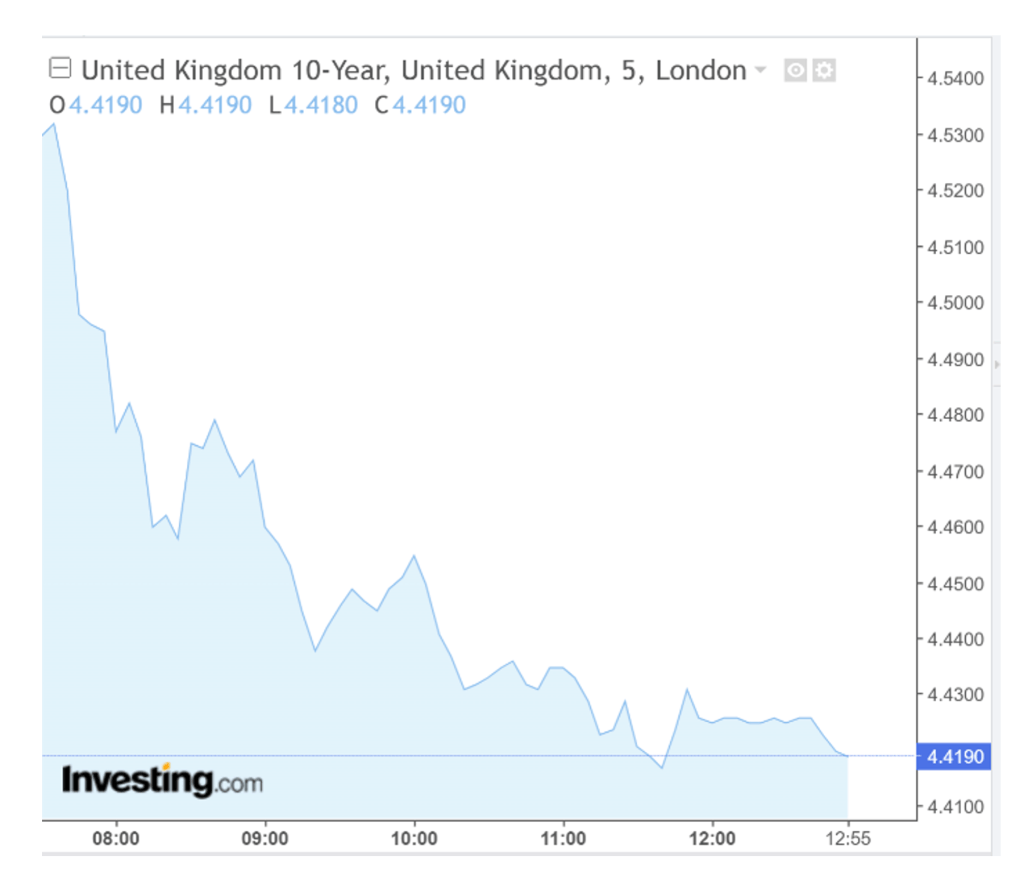
If the government can reduce borrowing costs, bond values should recover. This week’s budget will be a crucial indicator of whether investors are confident in the economic strategy of the UK government. Early indication since the Chancellors Budget are that markets are favourable to her budget, this is reflected in bond yield reducing, as per the chart below of UK 10 Year Bond yields:
Regional Performance
European markets have underperformed compared with the US and China. Both the US and China have posted robust growth, partly due to direct technological and economic competition. Trump’s tariff shock in April caused short-term disruption, but both economies rebounded quickly.
Europe, however, faces two headwinds:
- A relative lack of competitiveness in high-growth technologies
- Ongoing geopolitical instability in Eastern Europe
That said, easing monetary policy in the Eurozone and a widely expected UK interest rate cut in December may support European and UK growth in 2026.
What Does This Mean for 2026?
We expect fears of an AI bubble to diminish rather than materialise over the next 12 months. With that in mind:
Equities
We anticipate continued strength across major equity indices and will maintain balanced equity allocations where this aligns with each client’s risk profile.
Gilts (UK Government Bonds)
There is meaningful upside potential if borrowing costs stabilise or fall. For this reason, we expect to increase exposure to gilts across appropriate portfolios.
Property
Lower interest rates could provide support to property markets. However, the impact of the upcoming budget—particularly on disposable income and tax allowances—will be key.
We will maintain current positions until the fiscal picture becomes clearer following the Budget on Wednesday, 26th November.
Conclusion
As we conclude this year’s review, we want to extend our heartfelt thanks for your continued trust and partnership throughout 2025. It has been a year of change, progress, and opportunity, and we remain committed to guiding you with clarity and confidence as we move into 2026.
We wish you and your families a wonderful New Year filled with prosperity, good health, and happiness.
We look forward to catching up with you soon at your next annual review and supporting you through another successful year ahead.
The information provided in this Q4 2025 market update is for informational purposes only and should not be considered personalised investment advice. Investing in financial markets involves inherent risks, and past performance does not indicate future results. The content does not constitute a recommendation or endorsement of specific investment decisions. Please speak to your adviser for personalised advice.